


Withdraw money from a casino
24.02.2022
34890 Views
Contents E-Wallet Cards Cryptocurrency Bank Check PayPal Limits Fees Timeframes Reverse FAQ Conclusion Most casinos…
Blackjack is a classic card game with straightforward rules, but the choices you make can affect the outcome of every hand. You decide whether to hit, stand, double down, split a pair or surrender when the table allows it. The goal is not simply to make 21. You need to finish with a better hand than the dealer without going over 21.
This guide explains how to play blackjack online, choose favorable table rules and avoid common mistakes. It also covers the legal and practical points US players should understand before joining an online casino game.
Online casino laws are set at the state level. A blackjack site may be licensed in one state but unavailable in another, so US players should not assume that an operator is legal nationwide.
Before registering, check that the casino is approved by the gaming regulator in the state where you are physically located. Pennsylvania, Michigan, New Jersey and Connecticut, for example, publish information about authorized online gaming operators or sites.
Regulated casino apps may use geolocation technology to confirm that you are within state borders when placing a real-money wager. You may be able to create an account or review games while elsewhere, but real-money play generally requires you to be physically located in an eligible state.
You may also be asked to verify your:
Legal age requirements and available operators can differ by state. Check the official regulator’s website rather than relying only on an operator’s advertising.
Blackjack is played between you and the dealer. Other players may be seated at the same table, especially in live dealer blackjack, but you are not competing against their hands.
A standard round works like this:
You win when your total is higher than the dealer’s without going over 21. You also win when the dealer busts and your hand remains at 21 or below.
You lose when:
When your hand and the dealer’s hand have the same total, the result is normally a push. Your original bet is returned.
Blackjack uses standard playing cards with the following values:
| Card | Value |
|---|---|
| 2–10 | Face value |
| Jack, Queen and King | 10 |
| Ace | 1 or 11 |
An Ace counts as either 1 or 11, depending on which value gives you the stronger hand without causing a bust.
For example, an Ace and a 6 can count as either 7 or 17. This is called a soft 17 because the Ace can change from 11 to 1 if another card is dealt.
A 10 and a 7 make a hard 17. There is no flexible Ace in the hand, so taking another card carries a high risk of busting.
A blackjack is an Ace and a 10-value card dealt as your first two cards. The second card may be a 10, Jack, Queen or King.
A natural blackjack is different from reaching 21 with three or more cards. It usually receives a higher payout than a regular winning hand.
Look for a table that pays 3:2 rather than 6:5.
For example:
The difference is only $3 in this example, but it applies every time you receive blackjack. Choosing 3:2 rules helps protect your return over repeated play.


Use an online casino authorized by the gaming regulator in your state. Official operator lists are a better source than search ads, review-site claims or app-store availability.
Do not assume that a site is legal because it accepts US dollars or displays American branding. State regulators continue to take action against unlicensed operators offering casino games to US players.
You will normally need to enter personal details and complete an identity check.
Make sure the information matches your official records. Incorrect information can delay deposits, withdrawals or account verification.
The casino may also ask you to install or allow geolocation software. Location services must usually remain active while you are playing for cash.
US casino apps commonly offer RNG blackjack, live dealer blackjack and several rule variations.
Before joining, check:
For your first sessions, choose a standard table with familiar rules and a low minimum bet. Avoid starting with a version that adds several side bets, special cards or unusual dealer rules.
Choose a chip value and place it in the betting area. When betting closes, the game deals the opening cards.
Use a bet size that gives you room to play through normal winning and losing streaks. A $25 table may not be suitable for a $100 session bankroll because only four losing hands would use the full amount.
You normally receive two face-up cards.
In the American hole-card format, the dealer receives one card face up and another card face down. The face-up card is the upcard, while the face-down card is the hole card.
You should consider the dealer’s upcard before choosing your move.
If your first two cards are an Ace and a 10-value card, you have blackjack.
When the dealer shows an Ace or a 10-value card, the game may check the hole card before allowing the hand to continue. This dealer-peek rule can prevent you from placing additional split or double-down bets when the dealer already has blackjack.
If you and the dealer both have blackjack, the hand is usually a push.
Depending on your cards and the table rules, you may be able to:
Your decision should be based on your hand, the dealer’s upcard and a basic-strategy chart that matches the table rules.
After your turn ends, the dealer plays according to fixed rules.
A common rule requires the dealer to:
Soft 17 rules vary. Some tables require the dealer to stand on soft 17, while others require another card.
A table where the dealer stands on all 17s is generally better for the player.
After the dealer finishes, the game compares the hands and pays the result automatically.
You can then place another bet, change the chip value or leave the table.

Hit means taking another card.
You may continue hitting until you stand or your total goes over 21. Another card may improve a weak hand, but it can also make you bust.
Stand means keeping your current hand and taking no more cards.
You may stand because your total is strong or because the dealer has a weak upcard and may bust.
Double down means adding a second bet equal to your original wager. You receive exactly one more card and then automatically stand.
Players often double on totals of 10 or 11, but the correct move depends on the dealer’s upcard.
Some tables let you double on any first two cards. Others restrict doubling to totals such as 9, 10 or 11.
When your first two cards have the same value, you may be able to split them into two separate hands. You must place another bet equal to your original wager.
Each hand receives another card and is played on its own.
Basic strategy usually recommends splitting Aces and 8s:
You should normally avoid splitting 10-value cards because 20 is already a strong hand.
Check the table rules to see:
In most games, a 21 made after a split is not treated as a natural blackjack and pays 1:1.
Surrender lets you give up your starting hand and recover part of your original bet, usually half.
Late surrender may be available at some US blackjack tables. It can reduce your loss in a small number of poor starting situations, such as certain hard 16 hands against a dealer’s 10.
Do not surrender based only on a weak-looking hand. Use a strategy chart that includes the table’s surrender rule.
Insurance is a side bet offered when the dealer shows an Ace. You are betting that the dealer’s hole card is worth 10 and completes a blackjack.
The bet normally costs half of your original wager and pays 2:1.
Despite its name, insurance does not reliably protect your main bet. Basic strategy normally recommends declining it.
A soft hand includes an Ace counted as 11.
Examples include:
Soft hands give you more room to hit because the Ace can change from 11 to 1.
A hard hand either contains no Ace or contains an Ace that must count as 1.
Examples include:
You can often play soft hands more aggressively because one additional card cannot immediately make the hand bust.
Basic strategy shows the best mathematical move for your hand against the dealer’s upcard.
It tells you when to:
Basic strategy cannot predict the next card and does not guarantee that you will win. Its purpose is to reduce costly mistakes and keep the house edge as low as the rules allow.

Make sure the chart matches:
A chart for a single-deck table may give different instructions from one designed for a six- or eight-deck shoe.
The following recommendations appear in many US basic-strategy charts:
Use these as starting points rather than a complete strategy. The exact move can change with the table rules.
A game’s name does not tell you whether the rules are good. Open the help screen or paytable before placing a bet.
Avoid 6:5 blackjack when a 3:2 table is available.
The lower payout increases the casino advantage without giving you any extra benefit.
A table marked “S17” means the dealer stands on soft 17.
A table marked “H17” means the dealer hits soft 17.
S17 is normally the better option for players.
Look for tables that allow:
More restrictions usually mean fewer chances to increase your wager when the hand is favorable.
Better rules may let you:
The exact value of these rules is small on a single hand, but they affect the game’s long-term return.
RTP shows the theoretical percentage returned to players over a very large number of rounds when the stated playing assumptions are followed.
A published RTP may assume perfect basic strategy. Playing by instinct or using the wrong chart can produce a lower return.
Side bets can offer large payouts, but they normally come with a higher casino advantage than the main blackjack hand.
Learn the base game before adding Perfect Pairs, 21+3 or dealer-bust wagers.
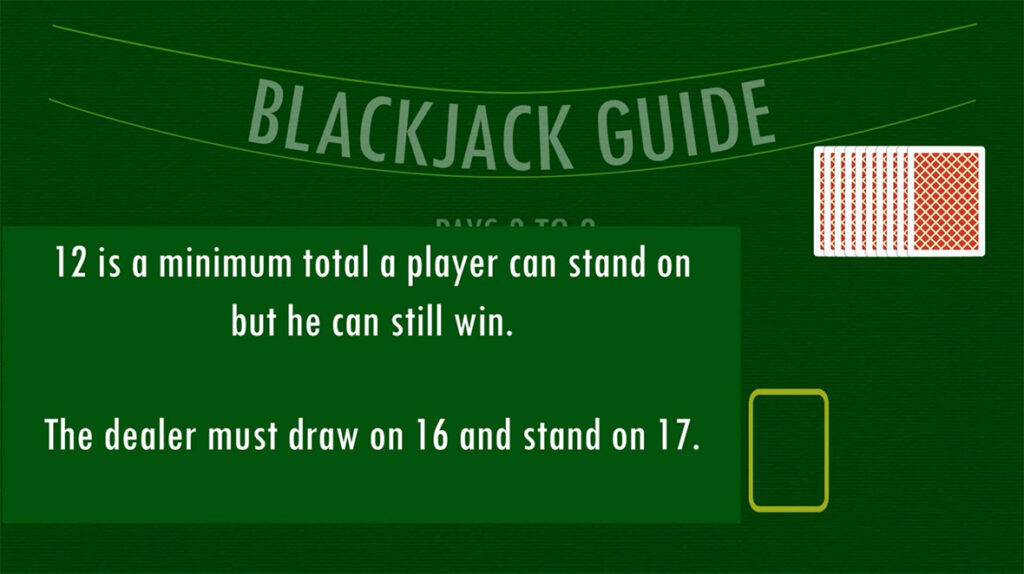
RNG blackjack uses casino software and computer graphics. Cards are selected through a random number generator, so the game does not need a human dealer.
Common benefits include:
The faster pace also allows you to place more bets in a shorter time. Set a time limit and avoid clicking through hands without checking the dealer’s upcard.
Live dealer blackjack is streamed from a studio or casino-style room. A human dealer handles physical cards while you bet and choose actions through the screen.
This format feels closer to a blackjack pit at a land-based casino. However, minimum bets may be higher, and you must make each decision before the timer expires.
Some live tables deal separate hands to a limited number of players. Others let many players make their own decisions from the same opening hand.

Classic blackjack normally uses the standard hit, stand, split and double-down actions.
However, the number of decks, blackjack payout and soft-17 rule can still vary. Always read the table rules.
Atlantic City blackjack commonly uses several decks and may offer late surrender, dealer standing on soft 17 and the ability to split more than once.
The name does not guarantee an identical rule set at every online casino, so check the help screen before betting.
Single-deck blackjack is played from one deck rather than a multi-deck shoe.
The lower deck count may look appealing, but some single-deck tables pay only 6:5 for blackjack. A multi-deck 3:2 table may be the better choice.
Multi-hand blackjack lets you play several hands in one round.
Each hand requires a separate bet, so playing four $5 hands means risking $20 before side bets or doubles.
Unlimited blackjack allows a large number of players to join the same live round. Players may start with the same cards but choose their own moves.
Progressive blackjack includes an optional jackpot wager.
The jackpot side bet is settled separately from the main hand, so you can lose the blackjack hand and still win the progressive bet—or the other way around.
Side bets are extra wagers based on special card combinations or dealer results.
They can offer larger payouts, but winning combinations are less common and the odds may be worse than those of the main blackjack hand.
This bet uses your first two cards and the dealer’s upcard to make a three-card poker hand.
Winning combinations may include:
Payouts differ between tables.
Perfect Pairs wins when your opening cards form a pair.
The payout may depend on whether the cards have:
This wager wins when one or both of your starting cards match the dealer’s upcard in rank.
A suited match normally receives a larger payout.
Buster Blackjack pays when the dealer busts.
Some versions increase the payout when the dealer goes over 21 with more cards.
Read the paytable before adding a side bet. Games with similar names may use different payouts.
Many RNG games include a demo mode funded with virtual credits. This gives you a chance to learn the buttons, practice basic strategy and test splitting or doubling without risking cash.
Players searching for free online blackjack may find practice games through casino lobbies or game-provider demo pages. Some sites let visitors play free online, while others require registration.
Demo winnings cannot be withdrawn, and a successful practice session does not predict future cash results. Its main purpose is to help you understand the game before you play for real money.
Live dealer blackjack normally requires a cash wager because the table operates in real time.
US casino promotions may include:
Do not judge an offer only by the advertised amount.
Check:
Blackjack may contribute less than slots toward a playthrough requirement or may be excluded completely.
For example, wagering $10 on blackjack may count as less than $10 of qualifying play. Read the promotion terms before depositing.
Available banking methods vary by casino and state.
Common options may include:
A deposit method is not always available for withdrawals. Check processing times, transaction limits and identity-verification requirements before making the first deposit.
Use a payment method in your own name. Mismatched account information may lead to additional verification.
No strategy removes the chance of losing. Bankroll management helps you control how much money you put at risk.
Decide how much you can afford to lose before opening the game.
Treat the amount as entertainment spending, not money that must be recovered.
Do not make another deposit simply because the first balance has run out.
Use a stake that leaves room for normal losing streaks.
For example, a $5 bet gives a $100 session bankroll more room than a $25 bet. This does not improve your chances of winning an individual hand, but it reduces the amount at risk on each result.
RNG blackjack can move quickly.
Choose a session length and take breaks. Stop playing when you notice that you are:
Your total amount at risk may include:
Before clicking Deal, check how much money is on the table.
Regulated US operators may provide deposit limits, time limits, cooling-off options and self-exclusion controls. Pennsylvania, for example, provides an online self-exclusion program and notes that self-imposed limits are available through iGaming sites.
These tools are most useful when set before gambling becomes difficult to control.
The Martingale system tells you to double the next bet after every loss.
A sequence might look like this:
The idea is that one later win will recover the previous losses and produce a $5 profit.
There are two major problems:
Moreover, doubling the bet does not improve the chance of winning the next hand. The system places an increasingly large amount at risk to make a profit equal to the original wager.
A steady bet size and fixed stop-loss provide better control.
An app may look professional without being authorized in your state.
Check the official regulator’s operator list before depositing. A regulated site gives you clearer rules, player-protection requirements and a recognized complaint process.
Two blackjack games may look almost identical while using different payouts, dealer rules and split conditions.
Check the paytable before placing the first bet.
You do not need 21 to win.
A total of 13 can beat a dealer who busts, while a hand of 20 can still lose to blackjack.
Make your move based on the dealer’s upcard rather than always trying to draw closer to 21.
Another player may have a different hand or may not be following basic strategy.
Base your move on your own cards and the dealer’s upcard.
Insurance sounds like protection, but it is a separate side bet.
Accepting it increases the amount at risk and is normally avoided under basic strategy.
Not every pair should be split.
Two 10-value cards already make 20, while two 5s are usually stronger when played as a total of 10.
Side bets raise the total cost of every round.
Focus on the main blackjack hand until you understand the table rules and basic strategy.
Related: Online casinos that accept bitcoin for deposits and bets - Us bitcoin casinos for us players.

Learning how to play blackjack online starts with one goal: beat the dealer without going over 21.
For US players, choosing the right casino is as important as choosing the right table. Use an operator authorized in the state where you are physically located, complete the required identity and location checks, and review the rules before betting.
At the table, look for a 3:2 blackjack payout, dealer standing on soft 17 and useful doubling and split rules. Use a basic-strategy chart that matches the exact game.
Furthermore, remember that better decisions can reduce mistakes but cannot guarantee a win. Set a budget, control your bet size and stop when the session is no longer enjoyable.
Blackjack offered by a state-regulated online casino must operate under the rules and technical standards of the relevant gaming authority. Regulated operators and suppliers may be subject to licensing, testing, audits and responsible-gaming requirements. A losing streak is not proof that the game has been manipulated. Fair blackjack can still produce several dealer wins or player busts in a row.
Card counting normally does not work in RNG blackjack because the virtual deck may be reshuffled after every hand. There is no continuing shoe from which to maintain a useful count. Live dealer games often use multiple decks and frequent shuffles. Even where cards remain in play between rounds, the dealing and shuffle procedures may make it difficult to gain a reliable advantage.
Use a casino authorized by the gaming regulator in the state where you are physically located. Official state websites may provide lists of approved operators or internet gaming sites. Do not assume that a casino is legal nationwide. Availability, age requirements and authorized brands can differ from state to state.
Physical location is usually the key requirement when placing a wager, although registration and account rules vary. Regulated casino apps may use geolocation technology to block real-money play from outside the state. You must also meet the operator’s age, identity and account requirements. Review the applicable state and casino rules before depositing.
There is no guaranteed method for beating blackjack in every session. The best practical approach is to use correct basic strategy, choose favorable table rules and avoid side bets with poor odds. This can lower the casino advantage, but it cannot control which cards are dealt.
Look for 3:2 blackjack, dealer stands on soft 17, double after split and reasonable resplitting rules. The complete rule set matters. A favorable payout can be offset by restrictive doubling or split rules, so review the table information and use a matching strategy chart.
The best offer depends on your state and the promotion’s current terms. Compare the playthrough requirement, blackjack contribution rate, maximum bet, expiration date and withdrawal rules. A large bonus may provide little value if blackjack does not count toward completing the wagering requirement.
You cannot win every blackjack hand or guarantee a profitable session. Random card results mean that the correct basic-strategy move can still lose. Any betting system or service promising certain wins should be treated with caution.
Online blackjack can be legitimate when it is offered by a casino authorized by the regulator in the player’s state. Check the regulator’s official operator list rather than relying only on the casino’s homepage. State regulators distinguish licensed operators from illegal or offshore sites and may take enforcement action against unlicensed businesses.
Games with 3:2 blackjack, dealer standing on soft 17 and favorable doubling and split rules generally provide better returns when played with correct basic strategy. Open the rules or paytable to check the published RTP. Two games with similar names may use different payouts or dealer rules.
The objective and player moves are usually the same. RNG blackjack uses casino software to deal the cards, while live dealer blackjack uses a human dealer and physical equipment shown through a video stream. RNG tables usually move faster, while live games provide a more traditional casino atmosphere.
Some RNG blackjack games include a demo mode funded with virtual credits. Demo play can help you learn the interface and practice a strategy chart. Virtual winnings cannot be withdrawn and do not predict how a real-money session will end.
The best starting hand is a natural blackjack: an Ace and a 10-value card. It normally beats every other total and may pay 3:2. A hard 20 is also strong but usually pays only 1:1.
A hard 16 against a dealer’s 10 is one of the most difficult situations. Standing leaves you with a weak total, while hitting carries a high bust risk. The correct move may change when surrender is available.
You will normally stand on a hard 17 because another card is likely to make you bust. Soft 17 is different because the Ace can change from 11 to 1. Depending on the dealer’s upcard and the rules, a strategy chart may recommend hitting or doubling.
Basic strategy recommends splitting Aces and 8s under most common US blackjack rules. However, the value of splitting Aces can depend on whether they can be resplit and whether each split Ace receives only one additional card.
A push means you and the dealer finish with the same total. Your original bet is returned, so you do not win a profit or lose the main wager.
Basic strategy cannot guarantee that you will win. It shows the mathematically best move for each hand against the dealer’s upcard. Its purpose is to reduce mistakes over many hands, not predict the result of the next deal.
Side bets offer larger payouts for special card combinations, but they often have worse odds than the main blackjack wager. Read the paytable and include every side bet in your total amount at risk. Beginners may find it easier to focus on the base game.

Contents E-Wallet Cards Cryptocurrency Bank Check PayPal Limits Fees Timeframes Reverse FAQ Conclusion Most casinos…

Contents Gambling sites Games Mobile Casinos Rank Payments Taxes FAQ Conclusion Online gambling in Canada…

Asian slots online are themed slot machine that includes special lucky symbols such as lucky…